Patient Turning Device, Bedridden Bedsore Pressure Relief Pillow, Positioning Bedroll Turn Over U Shaped Hospital Care Nursing Assist Supplies for Disabled Paralyzed Elderly (Waterproof)
Product Information
About this item
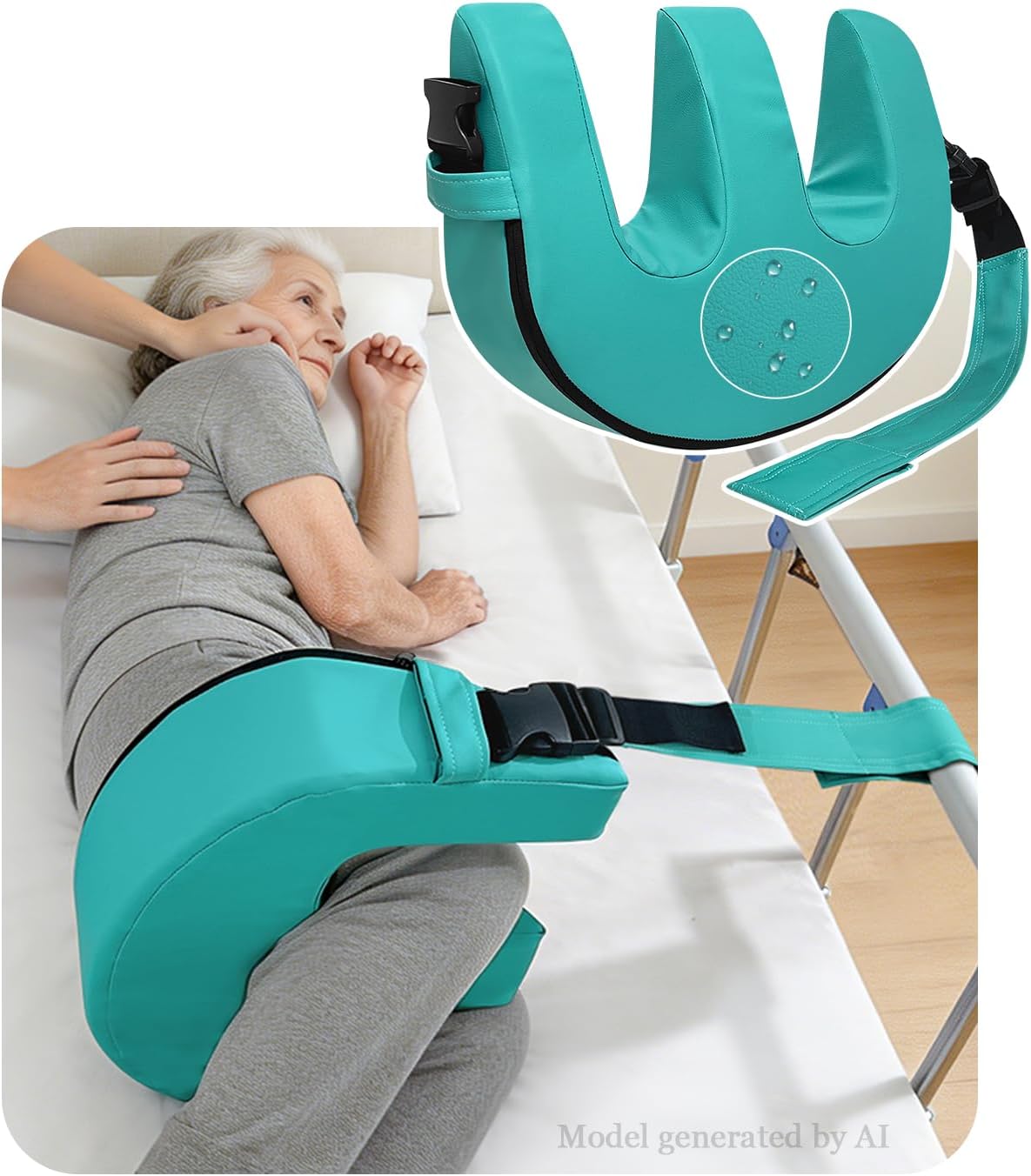
- When it's time to turn a patient, your hands still go on their shoulder and hip — that part doesn't change. What changes is how you apply the force. You no longer have to drag or pull the patient across the bed. Instead, you simply use the patient turning device as a pivot to guide the flip, reducing the strain on your arms and lower back. This makes one-person turns much more manageable, especially with heavier patients.
- The foam core inside the bedroll turning pillow holds its shape over time. It's dense enough to support different body weights without deforming quickly. The foam is on the firmer side by design — that firmness is what provides the necessary support for turning. If the foam were too soft, the roll would compress under weight and wouldn't be effective as a bedridden turning device at all.
- Cleaning is straightforward because the PU surface doesn't absorb liquids. Sweat, spills, or minor accidents stay on the surface and wipe off easily with a damp cloth. No lingering odors, no need to throw it in the washing machine and wait for it to dry — just wipe and get back to care. In a daily routine that involves multiple turns, this saves a fair amount of time and effort.
- The shape of the roll also helps with skin protection and circulation. By keeping the legs slightly separated and elevated, it reduces direct pressure on the heels, outer ankles, and tailbone. The elevation encourages blood flow back toward the upper body, which can help reduce swelling and the heavy, numb feeling that often comes with lying still for too long. Fewer pressure points also mean lower risk of pressure sores developing over time, making it a practical bedsore pressure relief pillow for long-term care.
- Beyond turning, this roll comes in handy for other tasks. Use it to temporarily prop up a patient while changing sheets, or pair it with bed rails to keep the patient stable in a side-lying position through the night. The turning device is designed with left and right quick-release buckles, enabling patients to be flipped in different directions with minimal caregiver effort. It's a versatile piece of elderly supplies for home care that covers several daily needs, whether you're working in a facility or caring for a family member at home.
Product Description
Waterproof Patient Turning Pillow If you're caring for someone who's bedridden or has limited mobility, you already know that turning them is one of the hardest parts of the day. It's tough on your back, and it's tough on them too. This bedridden patient turning device won't do the work for you, but it does make the whole process a lot more manageable. Here's what it does, in plain terms. Turning – The Real Reason You're Looking at This 1. When you turn a patient, you still put your hands on their shoulder and hip. That's non-negotiable. You no longer have to drag or pull the patient across the bed. Instead, you simply use the bedridden patient turning device as a pivot to guide the flip. 2. The U-shaped pillow holds the body in place, so you're not fighting to keep them centered. The integrated handles give you something solid to grip when you're lifting or adjusting. And if you want to keep them in a side position overnight, the straps let you attach the pillow to bed rails so it doesn't shift around. What that means for you: Less yanking, less strain on your lower back, and a much better chance of pulling off a one-person turn without exhausting yourself in the process. Support That Actually Stays Put 1. Nobody wants a bedroll turning pillow for elderly that goes flat after two weeks. This one uses high-density foam that's firm on purpose. Not rock-hard, but dense enough that it doesn't collapse when someone heavier uses it. It holds its shape, so you're not constantly fluffing it or adjusting it mid-turn. 2. The larger size also helps—more surface area means the weight spreads out, so the pillow stays where you put it instead of sliding around. What that means for you: One less thing to fight with during a turn. It stays put, holds up, and doesn't need replacing every few months. Cleaning – Because Stuff Happens 1. Let's be honest—accidents happen. Spills, sweat, leaks. The PU surface is there for exactly that reason. Liquids don't soak in. They sit on top, and you wipe them off with a damp cloth. No stains, no smells, no hauling it to the washing machine and waiting for it to dry. What that means for you: Less laundry, less downtime, and one less piece of equipment that feels gross to touch after a few uses. Pressure Relief – A Little Help for Skin and Circulation 1. Bedsores are a real concern, and this pillow helps in a pretty straightforward way. As both a positioning pillow and a bed sore pillow, the shape lifts the legs slightly and keeps them separated. That takes pressure off the heels, ankles, and tailbone—the spots that usually get red and sore. 2. The elevation also helps blood flow, which can cut down on swelling and that heavy, pins-and-needles feeling patients complain about. It works as a pressure relief cushion for elderly users while also serving as practical bed sore treatment for elderly care. What that means for you: Fewer skin issues to manage, and a more comfortable patient overall. More Than Just Turning 1. Once you have this pillow around, you'll find other uses for it. Changing sheets? Prop the patient up with it while you work. Legs swollen? Use it as a leg rest. Want to keep them stable in a side position? Pair it with bed rails. 2. It covers a handful of daily tasks without needing a different gadget for each one. What that means for you: Fewer tools to store, less time switching between them, and one less thing to think about during an already busy day. Care Instructions Wipe clean with a damp cloth. Do not machine wash. Who It's For Family caregivers looking to save their backs Elderly patients who need help turning Post-surgery or long-term bedridden patients Nursing homes and assisted living facilities