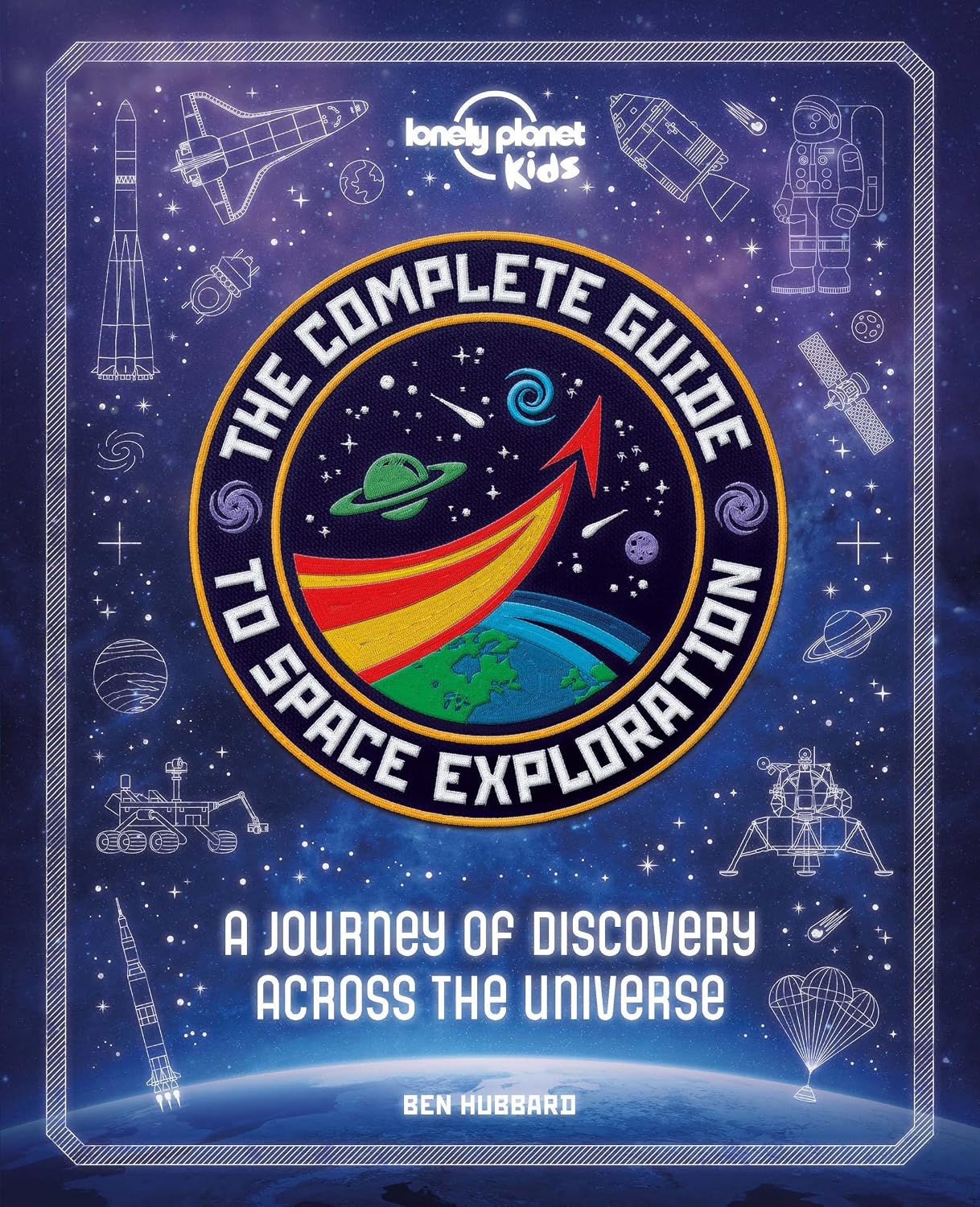
SPACE EXPLORATION FOR KIDS (AGES 8–12): Plan Missions, Solve Real Engineering Challenges, and Investigate Worlds Beyond Earth
Product Description
What does it take to plan a journey beyond Earth, choose the right instruments, guide a robot across unfamiliar terrain, or study a world that cannot be visited directly? This engaging space science and STEM guide gives young explorers more than facts to remember. It places them inside the thinking behind real exploration, where every question must lead to useful measurements, every design must work within limits, and every conclusion must match the strength of the available evidence.Written for curious learners ages 8 to 12, the content brings together astronomy, engineering, scientific reasoning, and problem solving in a clear and approachable way. Children explore how rockets produce thrust, why spacecraft follow curved paths, how telescopes reveal hidden information in light, why communication becomes harder across great distances, and how robotic explorers are designed for different environments. They also investigate astronaut survival, lunar conditions, Martian geology, asteroids, icy moons, and planets orbiting distant stars.The strongest feature is the way science is connected to decision making. Instead of simply being told what scientists know, young learners examine how knowledge is built. They compare possible explanations, judge which measurements would be useful, decide which instruments deserve limited payload space, and consider how power, mass, temperature, terrain, communication delay, safety, and reliability affect a design.The activities encourage thoughtful choices rather than one word answers. A rover may have several possible routes, but only some protect enough energy for the scientific goal. A landing site may offer valuable geology while creating greater risk. A chemical signal may look exciting until contamination becomes another possible explanation. These situations help strengthen critical thinking, scientific literacy, engineering judgement, and the ability to explain why one solution is more suitable than another.Responsible exploration is woven naturally into the learning. Children discover why planetary protection matters, how orbital debris can affect future spacecraft, why samples must keep their geological context, and why testing, revision, backup systems, and careful end of mission planning are essential parts of space engineering.Clear explanations, practical challenges, answer guidance, and an accessible glossary make the material suitable for independent learning as well as guided use. Parents can use it to encourage deeper conversations about science, while teachers, tutors, homeschool educators, trainers, libraries, and STEM programs can draw on its problem solving approach to support astronomy, engineering, inquiry, and classroom discussion.For young people who want to understand not only what lies beyond Earth but how we investigate it, this guide offers a more meaningful kind of space exploration: one shaped by careful questions, intelligent design, scientific evidence, and decisions that must work in the real conditions of space. Read more